
WINNIPEG WINTER HOMEOWNER GUIDE
Once winter arrives in Winnipeg, roof maintenance changes.
Fall is the time to inspect shingles, flashing, eavestroughs and other exterior components before snow arrives. During winter, the focus shifts to watching how your roof actually performs under snow, ice, extreme cold and changing temperatures.
You don’t need to climb onto a snow-covered roof to keep an eye on it. In fact, many useful winter checks can be made from the ground or from inside your home.
This guide explains what Winnipeg homeowners should watch for during winter, what common warning signs may mean, and when a roofing or insulation professional should take a closer look.
IN THIS GUIDE
Quick checklist Snow buildup Ice dams Attic moisture When to call FAQs
Quick Winter Roof Checklist
During winter:
- Watch for unusual or heavy snow accumulation.
- Look for recurring ice buildup along the eaves.
- Pay attention to large or persistent icicles.
- Check ceilings and upper walls for new water stains.
- Look in accessible attic spaces for frost or moisture.
- Keep exterior vents and exhaust outlets clear of snow.
- Watch for eavestroughs or downspouts being pulled or damaged by ice.
- Use a roof rake from the ground only when it can be done safely.
- Don’t climb onto an icy or snow-covered roof to clear it yourself.
- Investigate recurring ice dams instead of treating only the visible ice.
- Call for help if you have an active winter leak or unsafe snow and ice buildup.
If you are still preparing your roof before winter begins, see our Home Exterior Fall Maintenance Checklist instead.
WINTER ROOF CHECK 01
Watch How Snow Builds Up on Your Roof
Snow on a roof is normal during a Manitoba winter. The important thing is to pay attention to how it is accumulating and whether anything appears unusual.
Different roofs shed and hold snow differently depending on their slope, design, exposure and roofing material. Wind can also create uneven drifts, especially around roof intersections, valleys, dormers and other changes in roof shape.
From the ground, watch for:
- unusually deep or uneven accumulations;
- large drifts concentrated in one area;
- snow collecting around roof features;
- visible changes to the roofline; and
- damage to eavestroughs or other roof-edge components.
There isn’t one snow-depth rule that determines whether every roof needs clearing. Snow can vary greatly in weight depending on how wet, compacted or icy it becomes.
Canada’s current winter flood-preparedness guidance recommends monitoring roof accumulation and using a roof rake where appropriate, while also advising homeowners to work safely or hire a professional for roof and eavestrough clearing.
Homeowner check: Observe the roof from the ground after significant snowfall and during periods of repeated accumulation.
Consider professional help when: accumulation is difficult to manage safely, snow has formed heavy drifts or ice, the roof is difficult to access, or you notice changes that concern you.
WINTER ROOF CHECK 02
If You Use a Roof Rake, Stay on the Ground
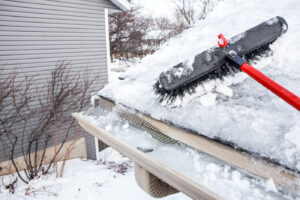
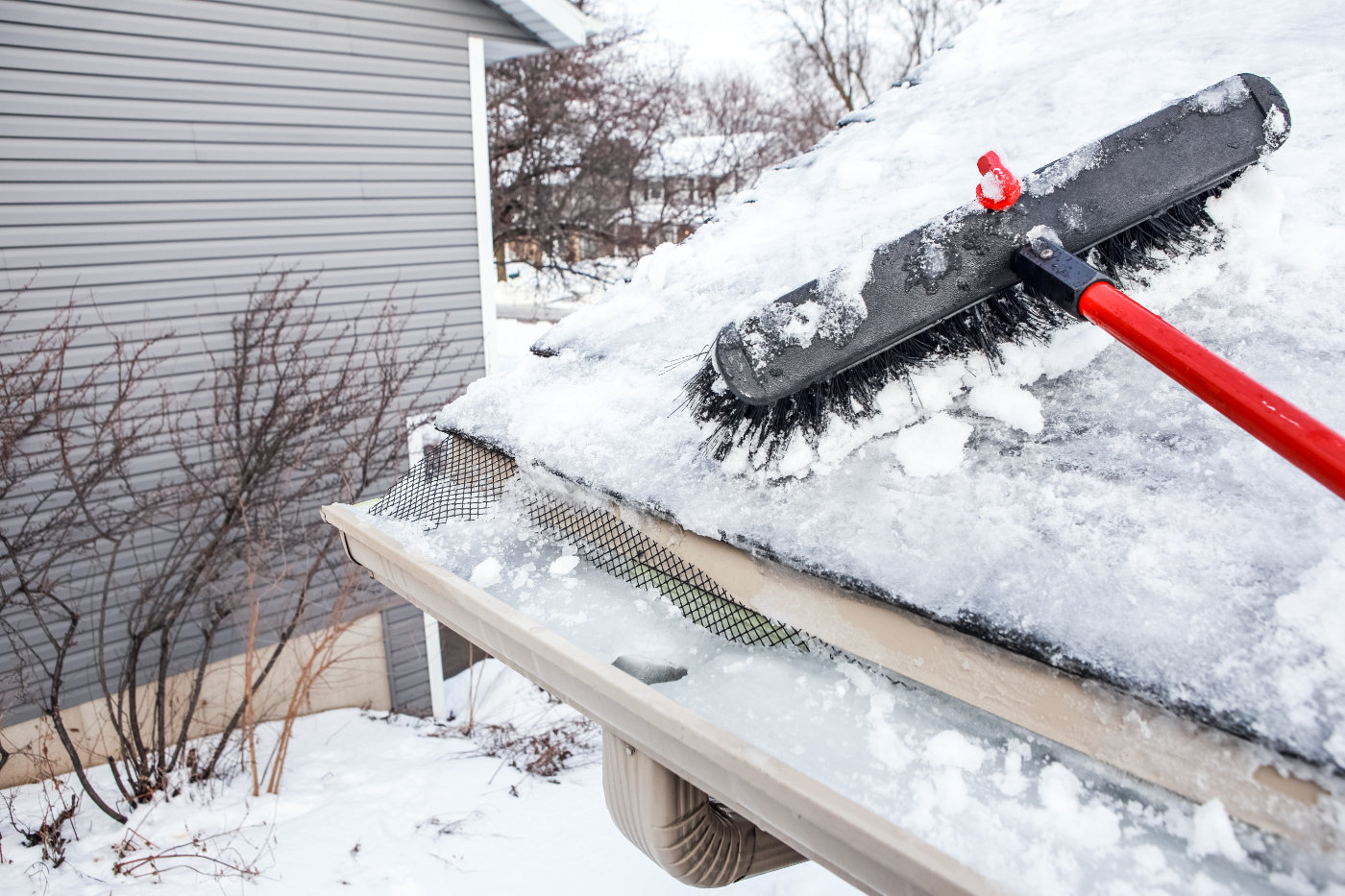
A roof rake can allow some homeowners to remove snow from the lower portion of a roof without climbing onto it.
If you use one:
- remain on the ground;
- work gradually rather than trying to move a large amount of snow at once;
- be aware of snow or ice falling toward you;
- stay clear of overhead electrical lines; and
- stop if the roof design or conditions make the job unsafe.
Avoid standing on an icy ladder or walking onto a snow-covered roof simply to remove snow.
Canada.ca specifically recommends roof rakes as one option for winter snow management while emphasizing safe work practices and professional help when roof clearing cannot be done safely.
Above All also offers Snow & Ice Dam Removal as a project type for Manitoba homeowners who need professional help.
WINTER ROOF CHECK 03
Know What an Ice Dam Actually Is
Ice dams form along colder portions of a roof, often near the eaves.
Natural Resources Canada explains the basic process this way: heat reaching the roof deck can melt snow from underneath. The meltwater travels down the roof until it reaches a colder area near the overhang, where it freezes.
As more melting and refreezing occurs, a mass of ice can develop. Water can then collect behind the ice and potentially move underneath roofing materials and into the attic or home.
This is why an ice dam isn’t simply a problem with the eavestrough.
Eavestroughs can become filled with ice or damaged by the buildup, but recurring ice dams frequently point toward conditions involving:
- attic air leakage;
- inadequate or uneven insulation;
- roof geometry;
- ventilation; or
- a combination of these factors.
Above All’s own team has emphasized that roofing, insulation and ventilation need to work together in Manitoba’s climate.
WINTER ROOF CHECK 04
Watch for the Warning Signs of Ice Damming
Not every icicle means your home has a serious ice-dam problem.
Instead, look for patterns such as:
- substantial ice building along the roof edge;
- recurring ice in the same location;
- water staining appearing during winter;
- ice forming behind or above the eavestrough;
- repeated freeze-thaw buildup; and
- known attic frost or insulation problems occurring alongside the ice.
Another useful clue is uneven snowmelt.
Natural Resources Canada recommends observing where snow or frost disappears from a roof first. Areas that repeatedly melt sooner than surrounding roof surfaces may indicate heat reaching the roof deck from below.
This doesn’t provide a complete diagnosis by itself, but it can help identify where further investigation may be worthwhile.
WINTER ROOF CHECK 05
Don’t Attack an Ice Dam With an Axe or Ice Pick
An ice dam can be frustrating, particularly when water is already finding its way inside.
But physically chopping ice from a roof can damage shingles and other roofing components — and working beneath or around heavy ice introduces additional safety risks.
Natural Resources Canada specifically warns against attacking ice dams with axes or ice picks because of the potential to damage the roof surface.
Heating cables are also sometimes promoted as an easy solution. NRCan notes that they may create channels through ice in some circumstances, but they have limitations and do not address the underlying cause of recurring ice dams.
If an ice dam is already causing a leak or has become extensive, professional removal is usually a better approach than experimenting on an icy roof.
WINTER ROOF CHECK 06
Check Your Attic During Cold Weather
Winter is actually one of the most useful times to look for certain attic problems.
If your attic is safely accessible, check it during or shortly after a cold period.
Look for:
- frost on the underside of roof sheathing;
- frost around nails or roof penetrations;
- damp or discoloured insulation;
- water staining;
- condensation;
- mould or rot; and
- unusual moisture around exhaust ducts, plumbing stacks or the attic hatch.
Natural Resources Canada notes that some frost can occur in cold climates, but significant accumulation deserves investigation. Moisture may be coming through failed roofing or flashing, but it can also enter the attic with warm indoor air escaping through the ceiling below.
Above All’s attic process also specifically checks penetrations such as plumbing stacks, exhaust fans, ducts and attic access points when evaluating air sealing before insulation work.
That is why attic frost shouldn’t automatically be diagnosed as a leaking roof.
WINTER ROOF CHECK 07
Air Sealing, Insulation and Ventilation All Matter
One of the biggest misconceptions around winter roofing is that adding more attic ventilation will automatically solve moisture or ice-dam problems.
It won’t.
Natural Resources Canada describes air sealing as the first line of defence against indoor moisture reaching the attic. Insulation helps limit heat transfer, and appropriate attic ventilation provides another means of managing moisture and keeping the roof space colder.
Importantly, NRCan also says that adding ventilation will not solve problems caused by significant air leakage from the home below.
For Manitoba homes, recurring winter problems therefore deserve a whole-system look.
Potential areas to investigate include:
- attic penetrations leaking warm air;
- insufficient or uneven insulation;
- insulation compressed near the eaves;
- blocked soffit or roof ventilation;
- bathroom exhaust improperly entering the attic;
- plumbing and electrical penetrations;
- poorly sealed attic hatches; and
- complicated roof areas where heat loss is concentrated.
WINTER ROOF CHECK 08
Keep Exterior Vents Clear of Snow
Your roof isn’t the only part of the house affected by winter accumulation.
Snow can bury or obstruct exterior exhaust openings, especially vents located close to ground level.
Canada’s winter preparedness guidance recommends regularly clearing snow and ice from exhaust vents to maintain proper ventilation and reduce safety risks.
Walk around your home after large snowfalls and check visible:
- dryer vents;
- bathroom exhaust outlets;
- fresh-air intakes;
- heating-system vents; and
- other exterior openings.
Don’t modify or seal a vent simply because snow repeatedly accumulates around it. Clear the obstruction and, if the placement or operation of the vent appears problematic, have the system assessed appropriately.
WINTER ROOF CHECK 09
Pay Attention to Winter Roof Leaks
Winter roof leaks can behave differently from leaks during a summer rainstorm.
Water may appear after:
- a period of snowfall followed by warmer temperatures;
- ice buildup along an eave;
- a sudden thaw;
- frost melting inside an attic; or
- snow accumulating around a vulnerable roof intersection.
If you notice water staining or dripping, take note of when it occurs. Timing can help distinguish between potential sources.
For example:
Leak during or immediately after melting snow: could point toward a roofing, flashing or ice-dam issue.
Moisture appearing after a prolonged cold spell: could also involve attic condensation or frost that later melts.
That distinction matters because repairing shingles will not solve condensation caused by indoor air leaking into the attic.
Above All’s Roof Repair team specifically handles winter leaks, ice-dam issues and roof snow removal in Winnipeg.
WINTER ROOF CHECK 10
Don’t Ignore New Ceiling Stains Until Spring
A small water stain can be tempting to ignore if it appears during the middle of winter.
But the size of the visible stain does not necessarily tell you how large the problem is.
Water can travel along rafters, roof decking and other materials before becoming visible inside the house. Moisture may also saturate insulation or other materials before reaching the finished ceiling.
If a stain is:
- new;
- getting larger;
- wet to the touch;
- accompanied by dripping;
- returning during thaw cycles; or
- appearing alongside significant roof ice,
it’s worth investigating rather than simply waiting for spring.
A winter assessment may not always allow every repair to be completed immediately, but identifying the likely source can help determine what needs to happen next.
WINTER ROOF CHECK 11
Watch Eavestroughs, Fascia and Roof Edges
Ice and snow can place additional stress on the components along the roof edge.
From the ground, look for:
- eavestroughs pulling away from the fascia;
- visibly sagging sections;
- large masses of ice inside or behind the eavestrough;
- loose fascia;
- damaged downspouts; and
- unusual staining or ice patterns around the eaves.
Avoid pulling or striking frozen eavestroughs to try to release ice.
If ice accumulation is significant enough to deform components or create a risk to people below, professional removal may be warranted.
When Should You Call a Roofing Professional During Winter?
Consider getting professional help when you have:
- an active roof leak;
- a substantial or recurring ice dam;
- unsafe snow accumulation;
- visible roof or eavestrough damage;
- shingles or flashing damaged during winter winds;
- unexplained interior moisture;
- a roof that can’t be safely assessed from the ground; or
- a winter problem that keeps returning despite previous repairs.
Not every winter roof issue means you need a new roof.
Above All’s own roofing team notes that many homeowners first contact them because they have a leak or problem but don’t know the overall condition of the roof. In some situations, a repair may address the immediate problem without requiring full roof replacement.
ABOVE ALL ROOFING & EXTERIORS
Need Help With Winter Roof Problems?
Whether it is a winter leak, a recurring ice dam, or heavy roof snow, Above All can help you explore the next steps.
What Can Wait Until Spring?
Some roofing work is easier to assess once the roof is clear.
If there is no active leak, immediate safety concern or worsening damage, a roofing professional may recommend monitoring the area and completing a more thorough inspection when conditions improve.
Useful things to document over winter include:
- photos of unusual ice buildup;
- where snow consistently melts first;
- locations of ceiling stains;
- when a leak appears;
- attic frost patterns; and
- areas where snow consistently accumulates.
That information can make a later diagnosis much easier.
COMMON QUESTIONS
Winter Roof Maintenance FAQs
Is snow on my roof dangerous?
Snow on a roof is normal. The concern is excessive or unusually concentrated accumulation, particularly when snow becomes wet, compacted or mixed with ice.
Because roof design and snow weight vary, there isn’t one universal depth at which every residential roof becomes unsafe.
If you’re concerned about significant accumulation, have the roof assessed rather than climbing onto it yourself.
Should I remove snow from my roof after every snowfall?
Usually not.
Monitor accumulation rather than automatically clearing the roof after every small snowfall. Roof design, snowfall amount, drifting and snow condition all matter.
If removal is appropriate, a roof rake may allow work from the ground. Avoid climbing onto a snowy or icy roof.
What causes ice dams?
Ice dams commonly develop when heat reaches the roof deck and melts snow. That water flows toward the colder roof edge and refreezes.
Air leakage, insulation, ventilation and roof design can all influence the conditions that lead to ice damming.
Do eavestroughs cause ice dams?
Eavestroughs can fill with ice and become part of an ice-dam problem, but they are not usually the fundamental cause.
Recurring ice dams should prompt a closer look at heat loss, air leakage, insulation and the roof/attic assembly.
Should I knock icicles off my roof?
Avoid standing directly below heavy icicles or roof-edge ice and striking them from an unsafe position.
Large ice accumulations can be heavy and unpredictable when they break loose. If they pose a hazard or are connected with significant ice damming, professional removal is the safer option.
Why is there frost inside my attic?
Attic frost can form when warm, moisture-laden indoor air leaks into the colder attic and condenses or freezes on cold surfaces.
Roof leaks can also introduce moisture, so recurring or substantial frost deserves proper diagnosis rather than assuming one cause.
Does attic ventilation prevent ice dams?
Ventilation can help keep an attic colder and manage moisture, but it is not a substitute for proper air sealing and insulation.
Natural Resources Canada specifically cautions that ventilation alone will not solve condensation problems created by air leakage.
Who should I call for a winter roof leak?
A roofing contractor can investigate possible roof, flashing or ice-dam problems.
If the problem appears connected to attic frost, condensation, air leakage or inadequate insulation, the investigation may also need to include the attic and insulation system.
Watch the Roof — Don’t Live on It
Winter roof maintenance is mostly about observation.
You don’t need to climb onto the roof every time Winnipeg gets snow. Watch how snow and ice behave, pay attention to changes inside the house and investigate patterns that keep returning.
An ice dam, attic frost or winter leak is often a symptom rather than the entire problem. Understanding whether the cause is roofing, drainage, air leakage, insulation, ventilation — or a combination of them — gives you a much better chance of fixing the issue properly.
And when spring finally turns up, hopefully sometime before July, you can return to normal seasonal inspection instead of troubleshooting beneath several months of Manitoba snow.